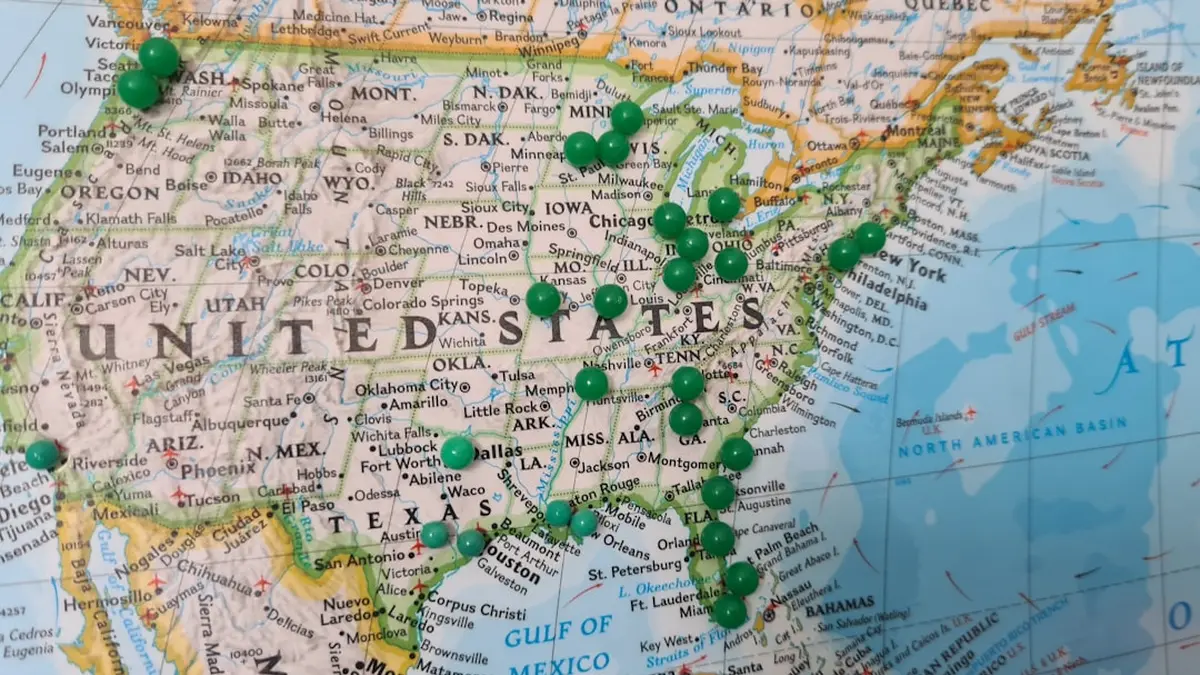
If you hold a Sweeps Coin balance and you live in California, Connecticut, Indiana, Louisiana, Maine, Montana, Nevada, New Jersey, New York, Oklahoma or Tennessee, the practical answer is: submit your redemption request now and stop buying Gold Coin packages on that account. Those eleven states have passed statutes against the dual-currency model, with effective dates running from 1 October 2025 (Connecticut, Montana, Nevada) through 1 November 2026 (Oklahoma). Delaware, Idaho, Illinois, Iowa, Michigan and Washington restrict the model without a 2026 sweeps-specific ban, using regulator letters or gambling statutes that were already on the books. That distinction matters to you for exactly one reason, and it is not a legal one: a statute gives you a date on the calendar, and a cease-and-desist letter gives you whatever notice the operator decides to send.
The thing most people get wrong is assuming the ban does something for them. It does not. Every bill in the sources reviewed here writes its penalties at operators, suppliers, payment processors, affiliates and in Oklahoma's case geolocation providers. Not one of them, according to InfoLawGroup's 27 July 2026 client alert, addresses what happens to an existing player account balance. Your Sweeps Coins survive on the operator's wind-down schedule, not the state's, and your Gold Coins do not survive at all: Bitcoin Chaser's crackdown explainer puts it flatly, "Gold Coins have no redemption value and are lost," and "no operator is obligated to compensate you for them."
This page is dated. Everything below is as of 17 September 2026, drawn from law-firm alerts, industry trackers and operator wind-down notices, and where two sources give different bill numbers for the same state, that conflict is named rather than smoothed over. Two gaps you should know about before you read: Pennsylvania and West Virginia do not appear in any of the sources reviewed for this piece, so anything you read anywhere about their current sweeps posture is not confirmed here.
How a ban reaches your account
The mechanism is four steps long and only one of them involves the state.
A bill is signed. The operator's legal team picks an exit date, which may be well before the statute's effective date. The operator emails account holders a wind-down notice with two separate deadlines: a last day to submit a redemption request, and a later last day to have funds out. Then the geoblock goes up.
Delaware is the cleanest worked example currently on record, because it is still running. After the Division of Gaming Enforcement sent cease-and-desist letters in mid-August 2026, RealPrize and LoneStar (both owned by RealPlay Tech Inc.) stopped issuing and accepting Sweeps Coins in Delaware on 21 August 2026, including coins from bonuses, promotions and postal AMOE entries. Players had until 21 September 2026 to submit a redemption request and until 22 September 2026 to get remaining funds out, per the player communication reported by Sweepsy. That is 31 days from play stopping to the redemption deadline. Gold Coin play in Delaware was unaffected and continues, which tells you what the wind-down is really about: the redeemable currency, not the site.
The Delaware regulator's reasoning is the same reasoning behind most of the 2026 statutes. BrightSideOfNews reports the DGE cited "the Delaware Constitution, the state Penal Code, and the Delaware Gaming Competitiveness Act of 2012," treating redeemable Sweeps Coins as functionally equivalent to real-money wagering rather than as a promotional sweepstakes.
| What differs | Banned by statute | Restricted by cease-and-desist |
|---|---|---|
| Worked example | New Jersey A 5447, signed 15 August 2025, immediate effect (Sweepsy tracker, 30 July 2026) | Delaware DGE letters to RealPrize and LoneStar, mid-August 2026 (BSN) |
| What starts the clock | A signature and a printed effective date you can read months ahead | A regulator letter you never see, followed by an operator email |
| Notice you get | As much as the operator chooses; Indiana operators pulled out ahead of the 1 July 2026 date | Whatever the notice says; Delaware gave 31 days to request a redemption |
| Who is penalised | Operators, and in Louisiana payment processors, affiliates and software providers (Casino Reports) | The named operator only; the DGE has not disclosed how many letters went out (BSN) |
| Penalty size | Up to $100,000 per violation in Indiana and Maine; $500 to $2,000 per violation in Oklahoma (InfoLawGroup) | No fine unless the operator ignores the letter and the state escalates |
| Compliance you can count on | High among the large brands: VGW, Stake.us, B-Two Operations and MW Services all left Indiana (SCCG, 6 July 2026) | Low: 2 of 65 Illinois letter recipients were found compliant, about 3% (iGaming Future) |
| Does it force payout of your balance | No. No statute in these sources requires it | No. Delaware operators set their own 31-day window voluntarily |
| What happens to Gold Coins | Forfeited, with no compensation obligation (Bitcoin Chaser) | May keep working, as in Delaware, where Gold Coin play continues |
There is a third route worth knowing about, because it produces the least warning of all: money claims. Louisiana's revenue department sued VGW for $44 million in unpaid taxes in September 2025, and Kentucky Attorney General Russell Coleman has active litigation against VGW over alleged unlawful sweepstakes operation, per SCCG Management's July 2026 guide. Litigation and tax exposure can move an operator out of a state on no schedule you can anticipate.
The list, as of 17 September 2026
Eleven states have enacted statutes. Sweepsy's tracker counted 14 states with active bans as of its 30 July 2026 update, a figure that includes states relying on pre-existing gambling law rather than a new sweeps bill.
| State | Bill | Signed | Effective | Note |
|---|---|---|---|---|
| Connecticut | SB 1235 | 11 June 2025 | 1 October 2025 | One of this blog's five core regulated states; sweeps play is gone, not restricted |
| Montana | SB 555 | 12 May 2025 | 1 October 2025 | Carries felony penalties (Sweepsy tracker) |
| Nevada | SB 256 | 2025 | 1 October 2025 | Sweepsy's own table gives a signing date of 31 October 2025, after the stated effective date; treat the signing date as unconfirmed |
| New Jersey | A 5447 | 15 August 2025 | Immediately | Dual-currency ban; the first of the big regulated states to act |
| California | AB 831 | 11 October 2025 (Bitcoin Chaser) | 1 January 2026 | Players had until 31 December 2025 to redeem (Company.gi). BSN cites a different bill, SB 1247, effective 1 January 2027; AB 831 is the number carried by the other sources |
| New York | AB 6745 | 5 December 2025 | Immediately | BSN cites A.8891 signed April 2026 with a 60-day compliance window and Class E felony exposure; the bill numbers conflict |
| Indiana | HB 1052 | 12 March 2026 (Gov. Braun) | 1 July 2026 | Up to $100,000 per violation, civil enforcement by the Indiana Gaming Commission, each transaction potentially a separate violation (Sweepedia). BSN cites HB 1412 |
| Tennessee | HB 1885 / SB 2136 | 22 May 2026 (Gov. Lee) | Immediately | Enforced through the state Consumer Protection Act; the AG had already sent about 40 cease-and-desist letters in December 2025 |
| Maine | LD 2007 | 6 April 2026 | Mid-July 2026 | Sources give 14 or 15 July. Penalties $10,000 to $100,000 plus gaming licence revocation; some operators shifted to Gold Coin only |
| Louisiana | HB 53 and HB 883 | Mid to late May 2026 | 1 August 2026 | Folded into anti-racketeering law. InfoLawGroup cites $100,000 fines and up to 5 years; Sweepsy's legislative scorecard cites up to 50 years and $1 million under the racketeering statutes |
| Oklahoma | SB 1589 | Vetoed 12 May 2026, override 14 May 2026 | 1 November 2026 | Not yet in force. Felony charges, $500 to $2,000 fines, tribal operators get online exclusivity |
Six more states restrict the model without a 2026 sweeps statute, and the practical effect on your account is the same. Delaware: DGE cease-and-desist letters, wind-downs running through 22 September 2026. Illinois: 65 operators ordered to block residents, with SB 1705 still alive on the state's two-year legislative cycle and proposing Class 4 felony treatment carrying up to three years. Iowa: SF 2289, signed 15 May 2026, with provisions effective 15 May and 1 July 2026, gives the Racing and Gaming Commission cease-and-desist authority rather than writing an outright ban. Idaho, Michigan and Washington rely on constitutional or statutory gambling prohibitions that predate the sweeps model entirely, per Casino Reports and Bitcoin Chaser.
Still pending or unresolved: Washington DC's Council Bill 26-0656, filed mid-April 2026 with a hearing on 4 May 2026 and no further action reported, which would legalise online casinos while banning the sweepstakes model. Anti-sweeps bills failed outright in 2026 in Florida (HB 189, SB 1580), Hawaii (SB 1507, HB 1434, SB 3281), Maryland (HB 295, HB 1226, SB 652), Massachusetts (H 4431), Minnesota (SF 4474, HF 4410), Mississippi (SB 2104) and Virginia (SB 579, HB 161, SB 118). BSN lists Ohio among eight states with pending restriction bills, alongside Florida, Texas, Georgia, Illinois, Virginia, North Carolina and Arizona, but gives no bill number for Ohio. Pennsylvania and West Virginia appear in none of these trackers.
Getting the balance out before the geoblock
This takes about twenty minutes the first time and costs nothing beyond whatever fees your operator's existing terms already impose. The one thing that costs money is doing it late.
-
The email address actually attached to the account
Wind-down notices arrive by email and nowhere else. If yours goes to an address you no longer read, you will find out about the deadline from a geoblock screen.
-
Any outstanding identity verification, finished
RealPlay Tech's Delaware notice said redemptions remain subject to the operators' existing Terms of Use and Promotional Play Rules. A wind-down does not waive anything your account already owed.
-
A payment method already linked and working
Adding one for the first time inside a 31-day window is how people miss the second deadline.
-
A screenshot of your Sweeps Coin and Gold Coin balances, dated
-
Your state's current status from the table above plus one tracker you can re-check
Sweepsy's state tracker carried a 30 July 2026 update date; a list without an as-of date is not usable for this.
-
The acceptance that your Gold Coin balance is worth nothing on exit
Plan around the Sweeps Coins only.
1. Find which of the three buckets your state is in. Statute with a date, enforcement action without one, or neither. Check the table above. If you are in the third bucket, you have time but no guarantee: Sweepsy's 2026 scorecard put the year at roughly five anti-sweeps wins to five losses, and noted that sweepstakes casinos still operate in the majority of US states with brand counts at an all-time high. You should see a clear answer for your state in under a minute.
2. Read the effective date, then stop using it as your deadline. Sweepedia's Indiana guide told players to "redeem your Sweeps Coins while platforms are still operating normally" rather than waiting for 1 July 2026, precisely because operators exit before the law forces them to. That is what happened: VGW brands, Stake.us, B-Two Operations and MW Services all withdrew from Indiana. Treat the signing date as your trigger, not the effective date.
3. Stop buying Gold Coin packages on that account the day a bill is signed. This is the single decision that determines whether the ban costs you money. Purchased Gold Coins convert to nothing when the operator leaves, and no source found here documents any operator refunding them.
4. Check the site's restricted-territory list, not just the homepage. Platforms added Illinois to their restricted lists after the Gaming Board's letters went out, per SCCG. If your state appears there, your account is on a clock even if the site still loads for you today.
5. Submit the redemption request, and note that it is a separate act from withdrawing. Delaware's wind-down had two dates: requests in by 21 September 2026, funds out by 22 September 2026. Getting the request in on the last possible day leaves you one day to clear whatever the operator's terms require. Aim for the request deadline minus a week.
6. Redeem the full balance, not a test amount. There is no second window. Once the request deadline passes, BSN's reporting on Delaware is explicit that funds not withdrawn become unavailable.
7. If you have already missed it, call support before you assume it is gone. Bitcoin Chaser's guidance is to "contact customer support immediately," noting some operators have extended deadlines case by case. No state law compels them to, so treat a granted extension as a favour, not a right.
8. Keep the notice email, the request confirmation and your dated screenshots. If you end up disputing a stranded balance, those three things are the entire record you will have, since the statutes give you no claim of your own.
Where players lose the balance
Waiting for the statutory date. The Indiana pattern is the one to learn from: the bill was signed 12 March 2026 for a 1 July 2026 effective date, and the major brands were gone before the deadline. You recognise this one by a login screen that says your region is unsupported on a date when the law technically still allows play. There is no recovery step at that point except a support ticket.
Treating a submitted redemption request as money in hand. The Delaware notice deliberately separates the request deadline from the withdrawal deadline by a single day. If verification or a payment problem surfaces in between, you have hours, not weeks.
Buying a Gold Coin package after a bill passes in your state. People do this because the purchase feels like buying entertainment, which it is, right up to the point the site geoblocks. Then it is a completed purchase with nothing behind it. Bitcoin Chaser is blunt that operators carry no obligation to compensate.
Reading a cease-and-desist state as safe because the site still works. In Illinois, only 2 of the 65 operators ordered to block residents were found to be in compliance. A site that ignores a regulator letter is a site that can be forced offline abruptly, without the orderly 30 to 60 day wind-down a voluntary exit produces.
Assuming a failed bill means the state is settled. Illinois SB 1705 was introduced in 2025 and remained technically alive into 2026 because the state runs a two-year legislative cycle. Maryland's three bills failed in 2026 and can return. A failed bill buys you a session, not a policy.
Trusting a ranked list that does not name its bills. The sources behind this page disagree on three states: BSN cites California SB 1247 (effective 1 January 2027) where others cite AB 831 (effective 1 January 2026), cites New York A.8891 signed April 2026 where the trackers cite AB 6745 signed 5 December 2025, and cites Indiana HB 1412 where every other source cites HB 1052. Those are not small differences if you are timing a redemption off them. When a page gives you a state and no bill number, you cannot check it, and you should not act on it.
States where the answer is different
Washington puts the player in scope. Bitcoin Chaser notes Washington's existing statute can reach individual players, not just operators, which is broader than every other approach on this list. Everywhere else, the exposure documented in these sources sits with the business.
Oklahoma has not happened yet. SB 1589 takes effect 1 November 2026, after a veto by Gov. Stitt on 12 May 2026 and an override on 14 May 2026. If you are in Oklahoma reading this in September 2026, you have a live account, a known date, and no reason to leave a balance sitting past October. The law penalises owners, employees, geolocation providers, gaming suppliers, platform providers, promoters and media affiliates, and grants tribal operators exclusive online gambling rights.
Iowa has no date at all. SF 2289 gave the Racing and Gaming Commission cease-and-desist authority instead of writing a prohibition. There is no day on which your account stops working by operation of law; it stops when the commission sends a letter and an operator responds to it. Plan as if the notice could arrive any month.
A ban does not always mean the site disappears. In Maine, operators exited or shifted to Gold Coin only mode. In Delaware, Gold Coin play continues normally while Sweeps Coins are gone. What a ban removes is the redeemable currency. If you were playing for redemptions, the product you were using no longer exists there even though the app still opens.
Sweepstakes poker sits apart. Sweepedia lists Global Poker, ClubWPT Gold and Clubs Poker among the options remaining to Indiana players after HB 1052, alongside licensed sports betting, DFS, land-based casinos and the state lottery. That is one source on one state, so do not generalise it to your own without checking, but it shows that "sweepstakes" and "sweepstakes casino" are not being treated identically by every legislature.
The five states this blog covers. New Jersey banned the model outright with A 5447 in August 2025. Connecticut did the same with SB 1235, effective 1 October 2025. Michigan appears in Bitcoin Chaser's list of states enforcing through pre-existing gambling statutes rather than new legislation. Pennsylvania and West Virginia do not appear in any source reviewed here, in either the enacted, pending or failed columns, so this page cannot tell you their status and will not guess at it.
What the wind-down costs you
The scale of what is being shut down explains why the wind-downs are as orderly as they are: this is a large, profitable business exiting markets on legal advice, not a set of sites going dark. Company.gi put 2024 Gold Coin spending across the industry at $8.5 billion to $10.6 billion, with 2025 estimates ranging from $6.9 billion to $14.3 billion depending on methodology, and VGW, operator of Chumba Casino, reporting $2.8 billion in revenue, up 29% year on year. BSN estimated the 2026 market at $7.2 billion against $4.8 billion in 2023, with the 2026 ban wave removing roughly $2.1 billion to $2.5 billion in annual spending. California alone was around 20% of the US market before its ban.
What that is worth to you is narrower. It means a large operator leaving your state will almost certainly post a wind-down notice with a redemption window, because it has a business elsewhere to protect. It does not mean a small brand will, and it does not mean the window will be 60 days rather than 31. California players got until 31 December 2025 under AB 831, which was roughly eleven weeks from the signing date reported by Bitcoin Chaser. Delaware players got 31 days. Both are enough time if you act on the signing and not the deadline, and neither is enough if you are away for a month.
Comments
No comments yet. Be the first to comment!
Leave a Comment